

The Lie of Self-Help in a Mental Health Crisis
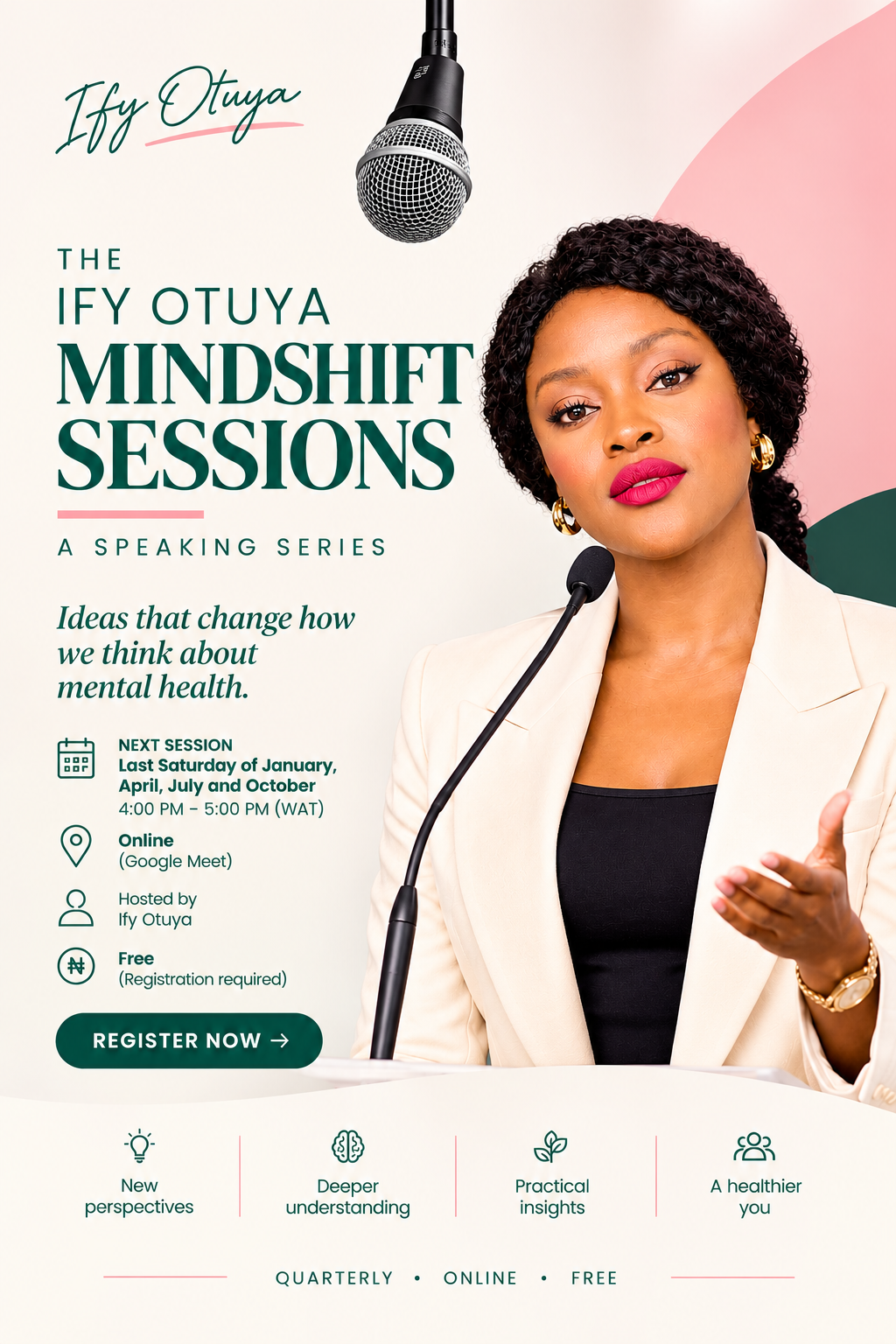
The Ify Otuya Mindshift Sessions | Mental Health Support Systems
What if some of the advice we give people struggling with their mental health is actually making their struggle harder?
“Stay strong.”
“Believe in yourself.”
“You can overcome anything if you put your mind to it.”
“Read this book. Change your mindset. Fix yourself.”
We have become remarkably comfortable telling people to overcome their struggles through individual effort. In Nigeria, our cultural celebration of grit, toughness, and personal perseverance has made mental health recovery seem like a solo mission.
But what happens when someone is experiencing a genuine mental health crisis? When their ability to think clearly, function, cope, or help themselves is significantly compromised?
Is telling them to try harder really enough?
Join Ify Otuya for The Lie of Self-Help in a Mental Health Crisis, a thought-provoking keynote presentation challenging the assumption that individuals can, and should, recover from serious mental health difficulties on their own.
Through this edition of The Ify Otuya Mindshift Sessions, we will examine the limitations of self-help culture during mental health crises and explore why meaningful recovery often requires something more powerful than individual determination: a supportive ecosystem of people, relationships, resources, and communities.
The Problem with Telling People to Fix Themselves
We live in a culture that celebrates self-reliance. We admire people who overcome adversity through sheer determination and often assume that the same approach should work for everyone facing mental health difficulties.
But mental health crises are not simply problems of insufficient motivation, discipline, or positive thinking.
When someone is struggling deeply, the expectation that they must independently find the strength, knowledge, and resources to recover can become an additional burden.
Self-help resources can be valuable. Personal agency matters. But neither should become an excuse for withdrawing support or placing the entire responsibility for recovery on the struggling individual.
The problem isn’t self-help itself. The problem is the belief that self-help should be enough.
Why Mental Health Support Systems Matter
Mental health recovery does not happen in isolation from the world around us.
Our relationships, families, workplaces, communities, access to professional help, and everyday environments can profoundly influence our ability to cope and recover.
This is why mental health support systems matter.
A person experiencing a mental health crisis may need more than encouragement. They may need someone who notices, someone who listens without judgement, someone who helps them access professional care, and someone who remains present when recovery becomes difficult.
A supportive ecosystem does not remove personal agency. It makes recovery less lonely, more accessible, and more achievable.
What Will This Talk Explore?
In this keynote presentation, we will examine:
- Why our cultural celebration of individual grit can become problematic in mental health recovery.
- How self-help culture sometimes places unrealistic expectations on people experiencing serious psychological difficulties.
- Why telling someone to “stay strong” may not be the support they actually need.
- The limitations of individual resilience during a genuine mental health crisis.
- Why mental health recovery should not be treated as a solo mission.
- The role of families, friends, workplaces, communities, and professional services in supporting recovery.
- How we can move from telling struggling people to fix themselves towards building stronger Mental Health Support Systems.
- What it means to create communities equipped to support people through difficult mental health experiences.
The Mindshift: From Individual Grit to Collective Support
Imagine a society where people experiencing mental health difficulties are not simply told to be stronger, but are surrounded by people and institutions capable of supporting them.
Imagine families better equipped to recognise distress. Friends who understand how to respond compassionately. Workplaces that take psychological wellbeing seriously. Communities that know when encouragement is insufficient and professional support is needed.
That is the kind of shift we need.
We must move beyond asking only, “What can this person do to help themselves?”
We must also ask, “What can we build around this person to help them recover?”
Because mental health support systems are not a luxury. They are an essential part of creating a society that takes mental health seriously.
What Will You Gain?
By attending this session, you will:
- Gain a fresh perspective on self-help and mental health recovery.
- Understand why personal resilience has limitations during serious mental health crises.
- Recognise the importance of collective support in psychological wellbeing.
- Reflect on how our everyday language and attitudes may unintentionally burden struggling people.
- Discover why stronger mental health support systems are necessary.
- Consider practical ways to contribute to a more supportive environment for mental wellbeing.
Whether you are a working professional, entrepreneur, parent, educator, mental health advocate, or someone interested in understanding mental health differently, this conversation is for you.
Meet Your Speaker: Ify Otuya
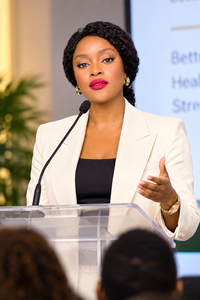
Ify Otuya is a mental health speaker, educator, and advocate passionate about making mental health education accessible, relatable, and useful.
With a background in Applied Psychology and experience in mental health education, she brings together psychological knowledge, educational insight, and relatable communication to help people better understand mental health and human behaviour.
Through public speaking, television appearances, online presentations, and educational initiatives, Ify creates opportunities for people to engage with mental health in informed and stigma-conscious ways.
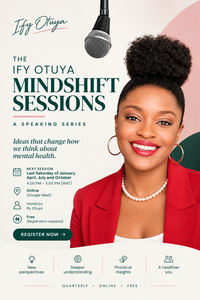
She hosts The Ify Otuya Mindshift Sessions, a quarterly speaking series featuring free online keynote presentations designed to challenge assumptions, introduce fresh perspectives, and encourage more intentional approaches to mental wellbeing.
Visit www.ifyotuya.com to discover more about Ify Otuya.


About The Ify Otuya Mindshift Sessions
The Ify Otuya Mindshift Sessions is a quarterly series of free online keynote talks exploring mental health, human behaviour, and the ideas that can help us live better.
Each session challenges familiar assumptions and invites audiences to consider new ways of understanding mental health and everyday life.
Ideas that change how we think about mental health.
Event Details
Event: The Lie of Self-Help in a Mental Health Crisis
Series: The Ify Otuya Mindshift Sessions
Speaker: Ify Otuya
Format: Online keynote presentation
Platform: Google Meet
Duration: One hour
Admission: Free
Registration: Required
Be Part of the Mindshift
We cannot continue telling people to fix themselves alone while ignoring the environments in which they are expected to recover.
Join us as we challenge the myth of solitary resilience and explore why building stronger mental health support systems is essential to supporting people through mental health crises.
Register for free and be part of the conversation.
Perhaps the most important question isn’t whether someone is strong enough to recover alone, but whether we have built a society that makes recovery possible.
 To attend, fill the registration form below (form admits one)
The Ify Otuya Mindshift Sessions
Ideas that change how we think about mental health.
Submit your review | |